
Breast Cancer Radiation Therapy
Personalized, Leading-Edge Radiation Treatment for Breast Cancer
At Advanced Radiation Centers of New York (ARC), we are leaders in the use of precision radiation therapy for breast cancer. Our board-certified radiation oncologists utilize cutting-edge technologies like Volumetric Modulated Arc Therapy (VMAT), Intensity-Modulated Radiation Therapy (IMRT), Partial Breast Irradiation (PBI), Deep-Inspiratory Breath Hold (DIBH), and surface tracking to improve patient outcomes and reduce side effects—all in a compassionate and supportive environment.
Understanding Breast Cancer
Breast cancer is the most common cancer among women, affecting 1 in 8 over a lifetime. Though less frequent, men can also be diagnosed. It arises when cells in the breast grow uncontrollably, often beginning in the milk ducts (ductal carcinoma) or lobules (lobular carcinoma).
Risk factors include age, family history, genetic mutations (like BRCA1/BRCA2), early menstruation, lifestyle habits, and previous radiation exposure.
Signs and symptoms may include:
- A new lump or mass
- Nipple retraction or discharge
- Skin dimpling or thickening
- Redness or shape changes in the breast
When abnormalities are found, further imaging (mammography, ultrasound, or MRI) and a biopsy are performed to confirm diagnosis.

After diagnosis, your care team—comprising a breast surgeon, medical oncologist, and radiation oncologist—collaborates to stage the disease and develop a personalized treatment plan. This may include surgery, systemic therapy (chemotherapy or hormone therapy), and/or radiation therapy.
Surgical options typically include:
- Lumpectomy (removal of tumor with breast preservation)
- Mastectomy (removal of the entire breast)
Radiation therapy is often recommended after surgery to destroy any remaining cancer cells and reduce the risk of recurrence—particularly after lumpectomy.
ARC offers a full suite of modern radiation therapies to ensure optimal treatment:
3D Conformal Radiation Therapy (3D-CRT)
Uses imaging to create a 3D model of your breast, enabling targeted radiation with less impact on healthy tissue.
IMRT and VMAT
Highly sophisticated techniques that shape and modulate the beam to match the tumor—ideal for complex or left-sided breast cancers.
Partial Breast Irradiation (PBI)
Radiation focused only on the tumor area rather than the entire breast—typically completed in a shorter course.
Deep Inspiratory Breath Hold (DIBH)
Protects the heart from unnecessary radiation exposure in left-sided breast cancer by having the patient take a deep breath during treatment.
Surface Tracking
Real-time monitoring of your body’s position to ensure pinpoint accuracy during treatment sessions.
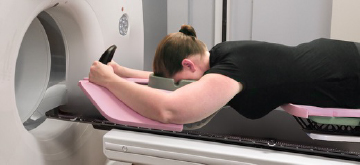
Prone Breast Irradiation
Patient lies face-down to allow gravity to pull the breast away from the chest wall—reducing exposure to the heart and lungs, particularly effective for larger breasts or left-sided tumors.
Most side effects are mild and temporary:
- Skin changes: redness, dryness, or mild peeling
- Fatigue
- Breast swelling or sensitivity
These effects typically resolve within 4–6 weeks after treatment. ARC employs advanced techniques like IMRT, DIBH, and prone positioning to minimize long-term risks.
Consultation
Your care at ARC begins with a comprehensive consultation. During this initial visit, you and your family will meet with one of our experienced radiation oncologists to review your diagnosis and medical history. Together, you’ll explore the most appropriate and effective radiation treatment options tailored to your individual needs. The discussion will also include treatment expectations, potential side effects, and available alternatives to ensure you are fully informed and confident in your care plan.
Simulation (Your Treatment Planning Session)
Once radiation is recommended, you’ll begin with a session called a simulation—a detailed planning appointment that lasts about 45–60 minutes.
During this session:
- We help you get into the best position for your treatment, sometimes using a custom mold to ensure you’re positioned the same way every day.
- Tiny, freckle-sized tattoos may be placed on your skin to help us align your body accurately before each treatment.
- A special imaging scan is performed to pinpoint exactly where the cancer is, so we can target it while protecting nearby healthy tissues.
The Planning process (Behind the Scenes)
After your simulation, your care team—which includes your radiation oncologist, medical physicists, and dosimetrists—will work together to create a custom radiation plan just for you. Using advanced 3D computer software, they map out how to deliver the exact amount of radiation to the right place, while minimizing exposure to healthy areas.
This planning process usually takes 1 to 2 weeks, and it results in a detailed “blueprint” that guides your daily treatments.
Daily Radiation Treatments
Radiation is typically given once a day, five days a week for several weeks. Treatments are done using a machine called a linear accelerator, which delivers invisible, high-energy radiation beams to the cancer.
Here’s what you can expect:
- Each visit takes about 10–15 minutes, with most of the time spent getting you into position. The actual treatment only lasts a few minutes.
- You won’t see or feel the radiation, and there’s no pain during treatment.
- The treatment room is spacious and not claustrophobic.
- In some cases (such as prostate treatment), you may be asked to drink water before your appointment to help move the bladder away from the treatment area.
- Most patients feel well enough to drive themselves, go to work, exercise, and continue their daily routines.
Your radiation oncologist will let you know if there are any specific precautions or changes you should make during treatment.
Weekly On-Treatment Physician Review
During your treatment course, you’ll have weekly visits with your radiation oncologist. These short check-ins help us:
- Monitor how you’re feeling
- Check for any side effects
- Adjust medications if needed
- Answer any questions you have
These visits are an important part of your care and help us support you every step of the way.
Completion of Therapy and Follow-Ups
At the end of your treatment, you’ll meet with your radiation oncologist to talk about:
- What to expect in the coming weeks
- How side effects should improve
- Whether any additional treatment or follow-up is needed
Regular follow-up appointments are essential after radiation to monitor your recovery and watch for any signs of recurrence. We’ll be here to support you long after your final treatment.
If you ever have questions or need guidance along the way, don’t hesitate to reach out. Our team is here to help you feel informed, confident, and cared for throughout your journey.